
Therapy vs. Self-Healing — Do You Need a Professional or Just Better Tools?
Not Every Wound Needs Stitches. But Some Do.
There's a moment when you ask yourself, quietly:
"Can I handle this on my own?"
And there's wisdom in that.
Not everything needs a therapist.
Not every ache is trauma.
Some emotions just want air, not analysis.
But there's also a line — blurry, often invisible — where self-help becomes self-harm when done alone for too long.
So how do you know?
The Myth of Either/Or
You don't have to choose between professional therapy and self-healing tools.
The real healing happens somewhere in-between.
Think of it like this:
- Therapy is a surgeon — deep, focused, precise.
- Self-healing is your immune system — slow, daily, invisible.
You need both.
When Self-Healing Works Best
You have space to reflect.
You have tools like journaling, mindfulness, movement.
You know your emotional patterns — and they don't spiral out of control.
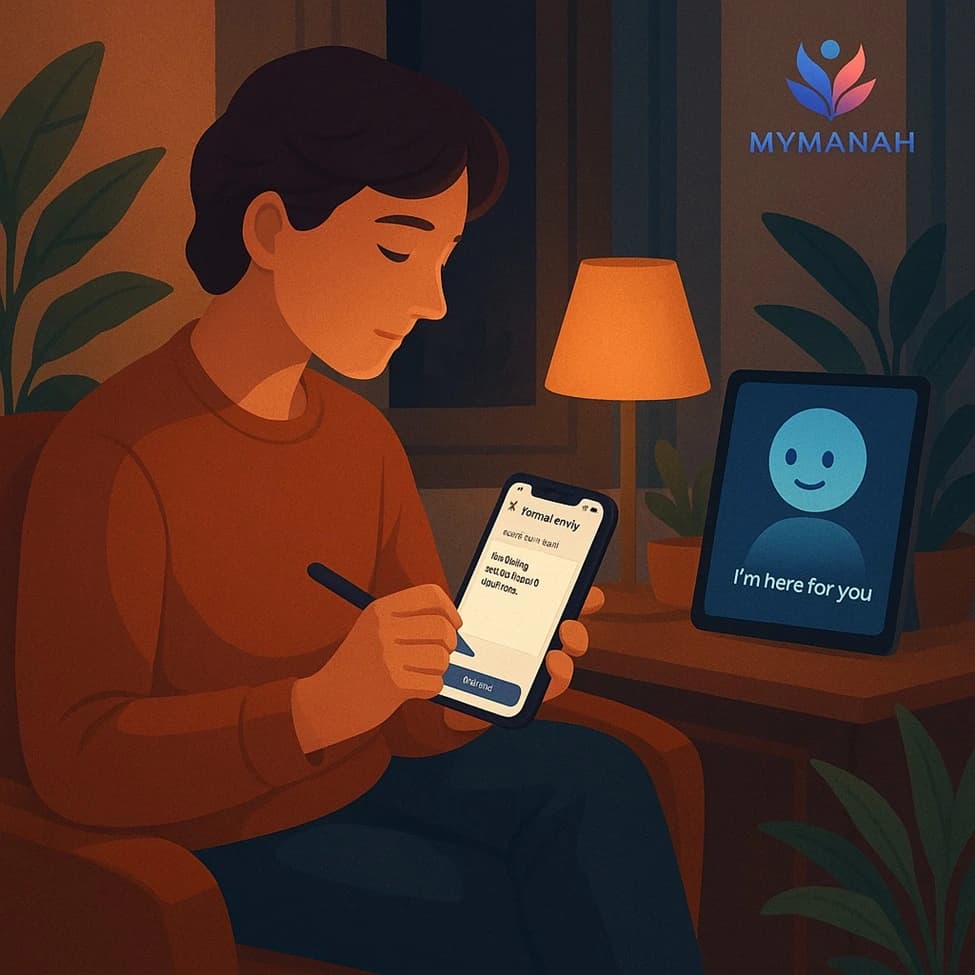
This is where manAI thrives.
Where small emotional micro-checks, mood logs, and daily reflection can be transformative.
You don't need permission to self-heal.
You need consistency and self-awareness.
When Therapy Becomes Essential
- When your thoughts become louder than your voice.
- When every coping strategy feels like a mask.
- When your emotions start dictating your decisions.
- When you're stuck in a pattern you can name — but not break.
Therapy gives you a witness. A mirror. A trained presence.
Sometimes, that's the difference between insight and overwhelm.
The Hybrid Future of Healing
At MyManah, we don't believe in forcing a path.
Some days, manAI is enough — your silent companion at 1AM.
Other days, you need the depth of a therapist who can hold space you don't even understand yet.
That's why we blend both.
Tech and touch. Insight and instinct.
Journaling that leads to therapy. AI that listens without judgment.
Micro-healing moments that stack up over time.
Ask Yourself This
- "Am I healing, or just surviving?"
- "Am I avoiding help, or choosing self-trust?"
- "Am I feeling lighter, or just distracted?"
Your answers will guide you — not to the "right" path, but to your next step.
And remember: strength isn't doing it alone.
It's knowing when to ask for more hands.