
MyManah Logo
MyManah
Mental Health Infrastructure
Platform Features

Complete mental health app features for patients and clinicians

MyManah is a comprehensive mental health platform with mood tracking app capabilities, therapist dashboard tools, AI journaling app features, and secure clinician dashboard mental health functionality. Built for patients, therapists, psychiatrists, and institutions.

Patient CareAI FeaturesClinical ToolsInstitutionalInfrastructure

Patient Care Features

Core tools designed for daily emotional wellness and self-care.
Mood Tracking

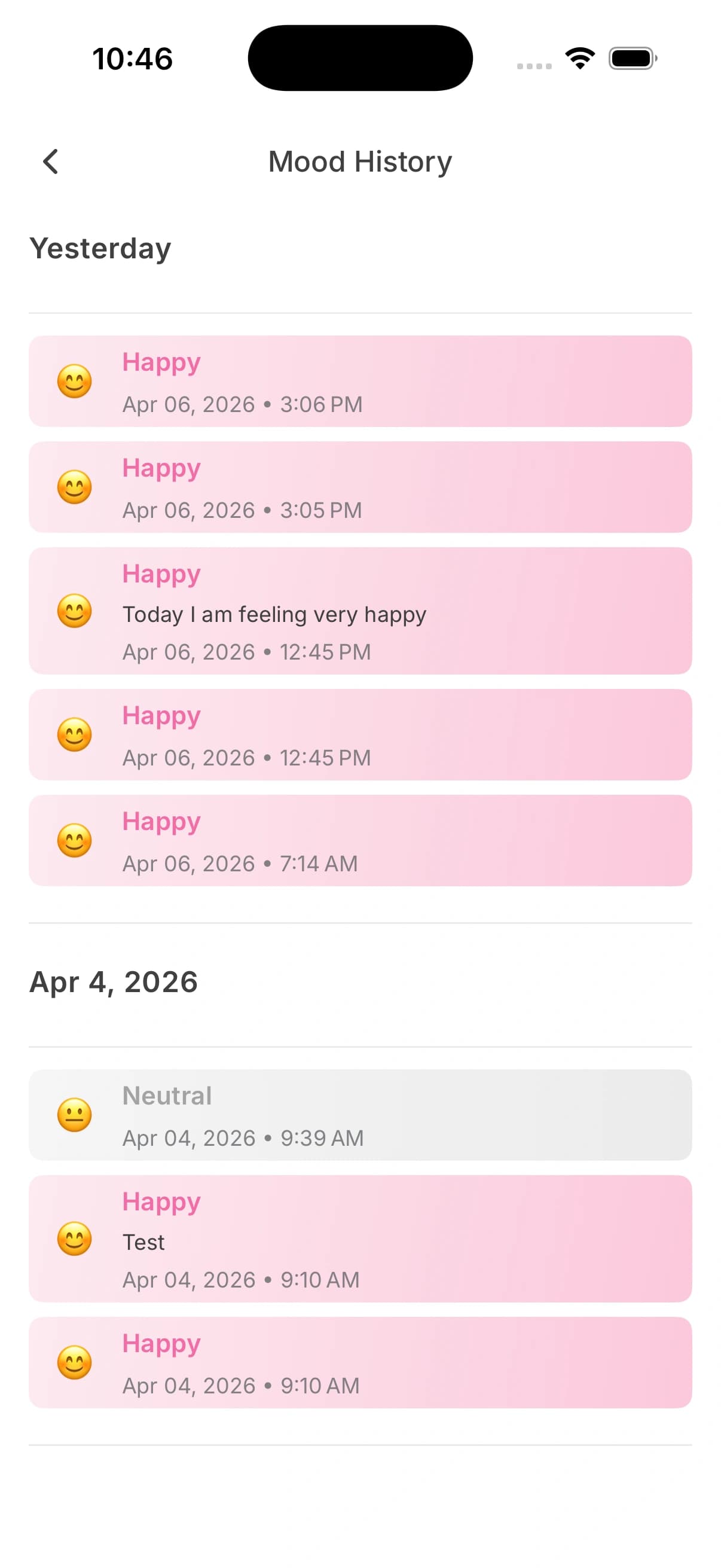
Mood Tracking

Track emotional patterns over time to help users and clinicians identify trends, triggers, and progress.
Who:Patients / End Users
Problem:Users lack visibility into their emotional cycles and triggers.
Outcome:Better self-awareness and early identification of mood deterioration.
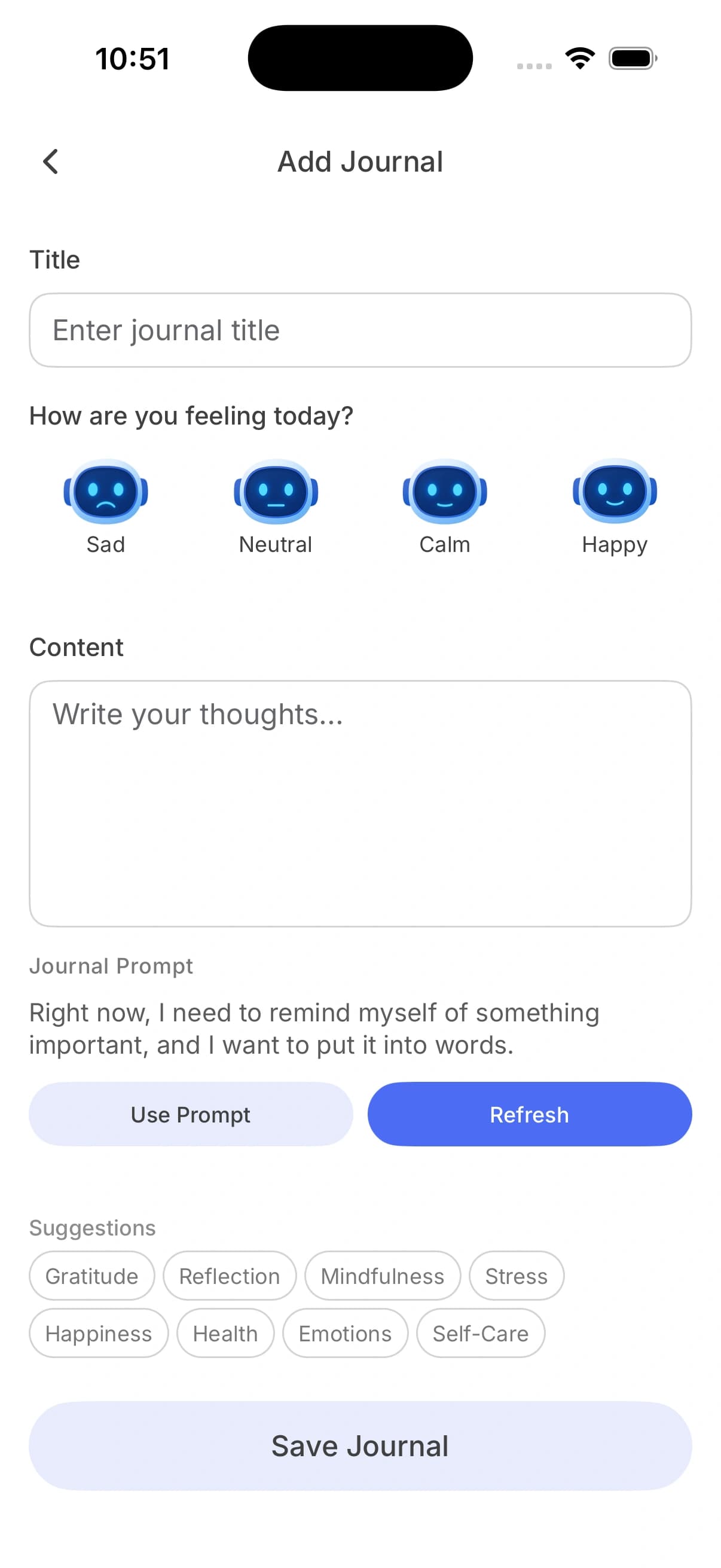
Journaling

Journaling

Guided prompts and free-form journaling to help users process emotions and reflect on daily experiences.
Who:Patients
Problem:Unstructured thoughts make it hard to process emotions effectively.
Outcome:Improved emotional regulation and self-reflection habits.
Reminders

Reminders

Personalized notifications for mood check-ins, medication, and wellness activities.
Who:Patients
Problem:Users forget to track mood or complete wellness activities regularly.
Outcome:Consistent tracking habits and better adherence to wellness routines.
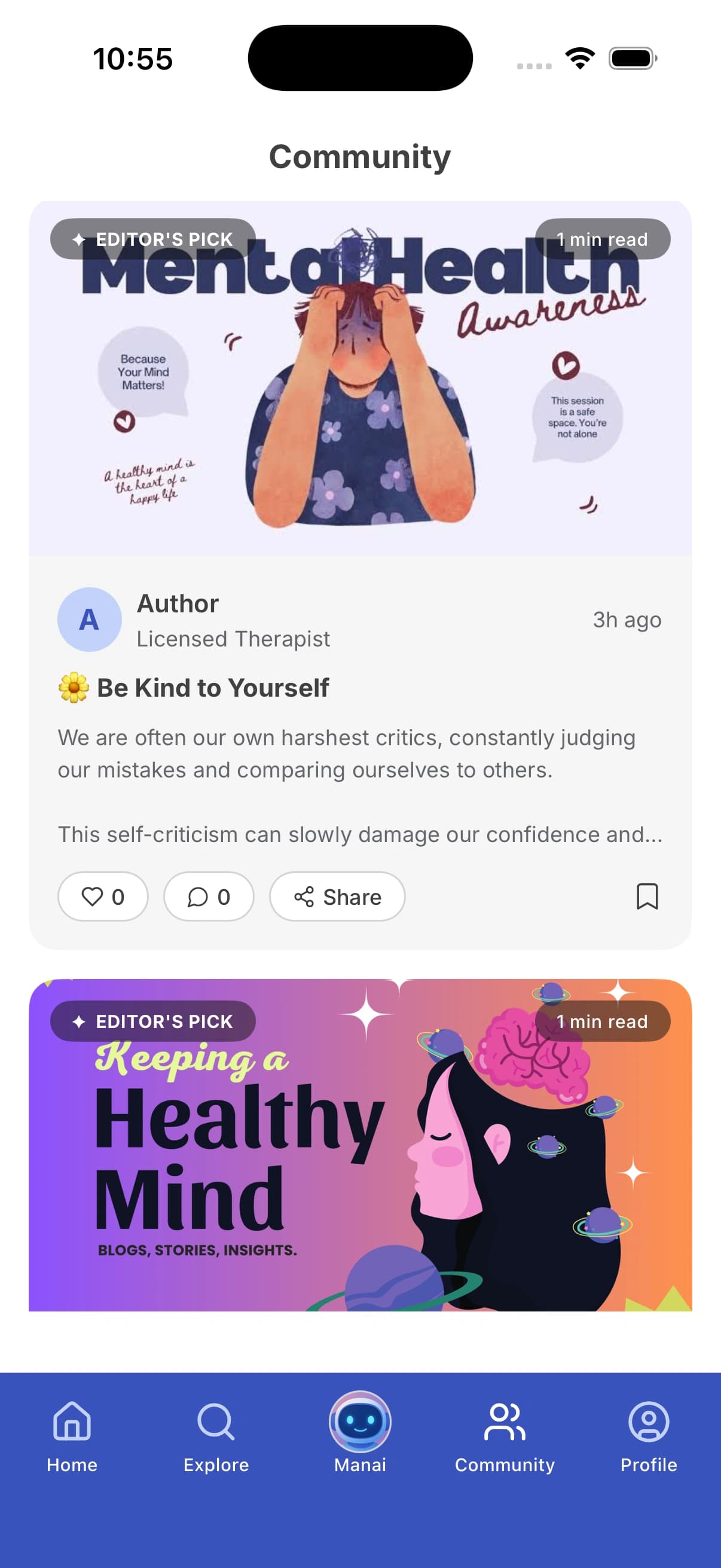
Self-Help Tools

Self-Help Tools

Curated exercises, breathing techniques, and coping strategies for immediate emotional support.
Who:Patients
Problem:Users need immediate tools during emotional distress between sessions.
Outcome:Reduced anxiety and improved coping skills during challenging moments.
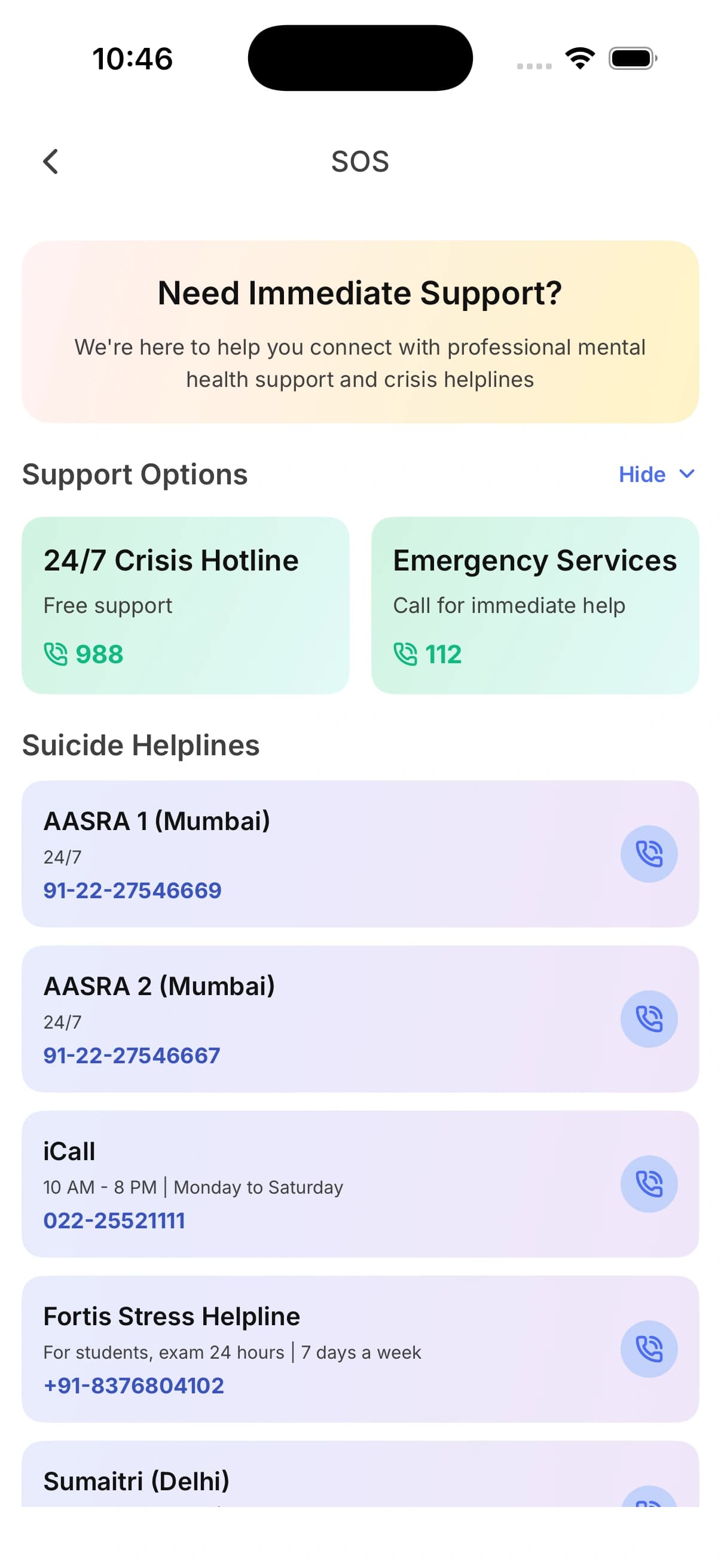
Community Spaces

Community Spaces

Safe areas to connect, share, and support peers. Encourages collaborative growth and engagement.
Who:Patients
Problem:Users feel isolated and lack peer support during their mental health journey.
Outcome:Reduced isolation and increased motivation through shared experiences.
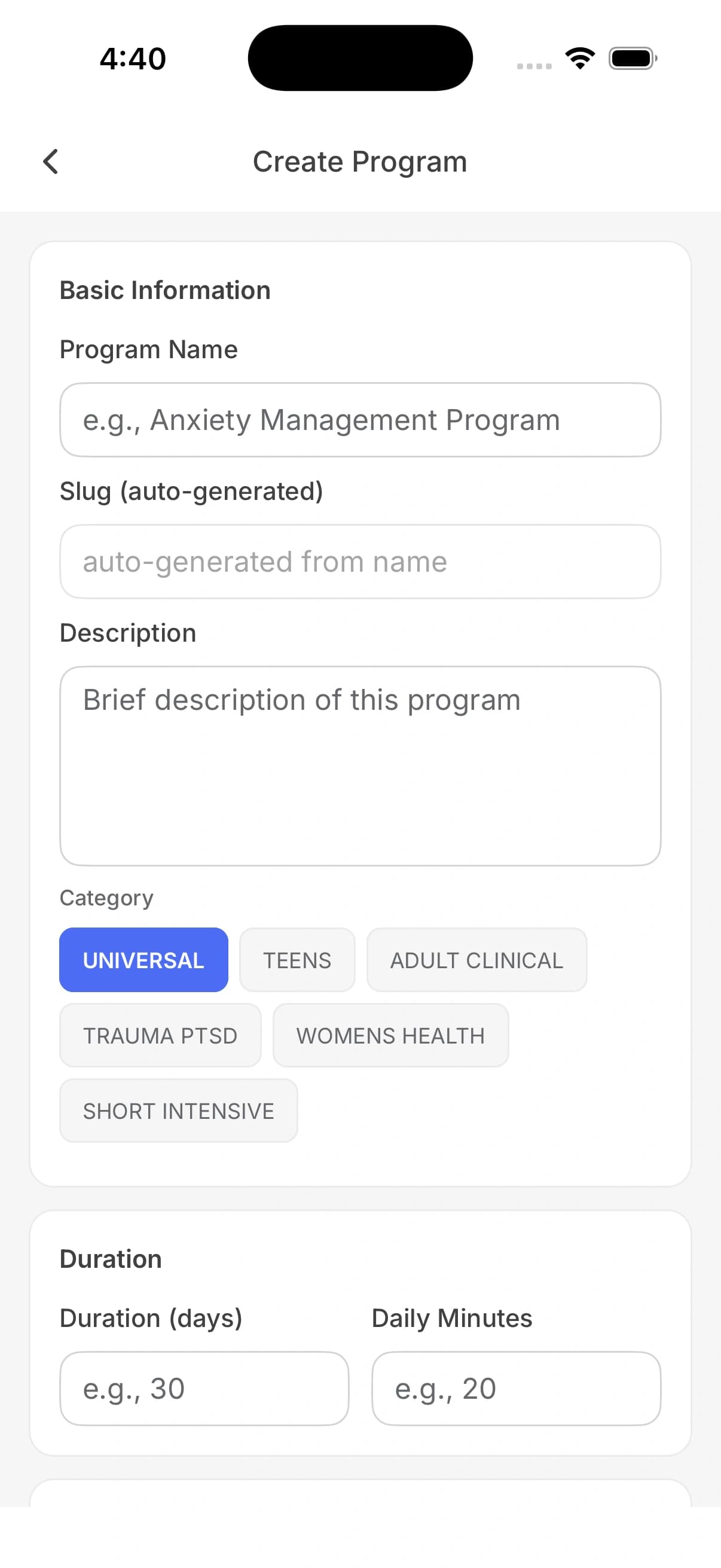
Emergency Toolkit

Emergency Toolkit

Quick access to guidance and support resources during urgent times. Prioritizes safety while connecting users to help.

Who:Patients in crisis
Problem:Users need immediate support during emotional emergencies but may not know where to turn.
Outcome:Faster access to crisis resources and reduced risk during emotional emergencies.

AI Features

Intelligent systems that provide personalized support and insights.
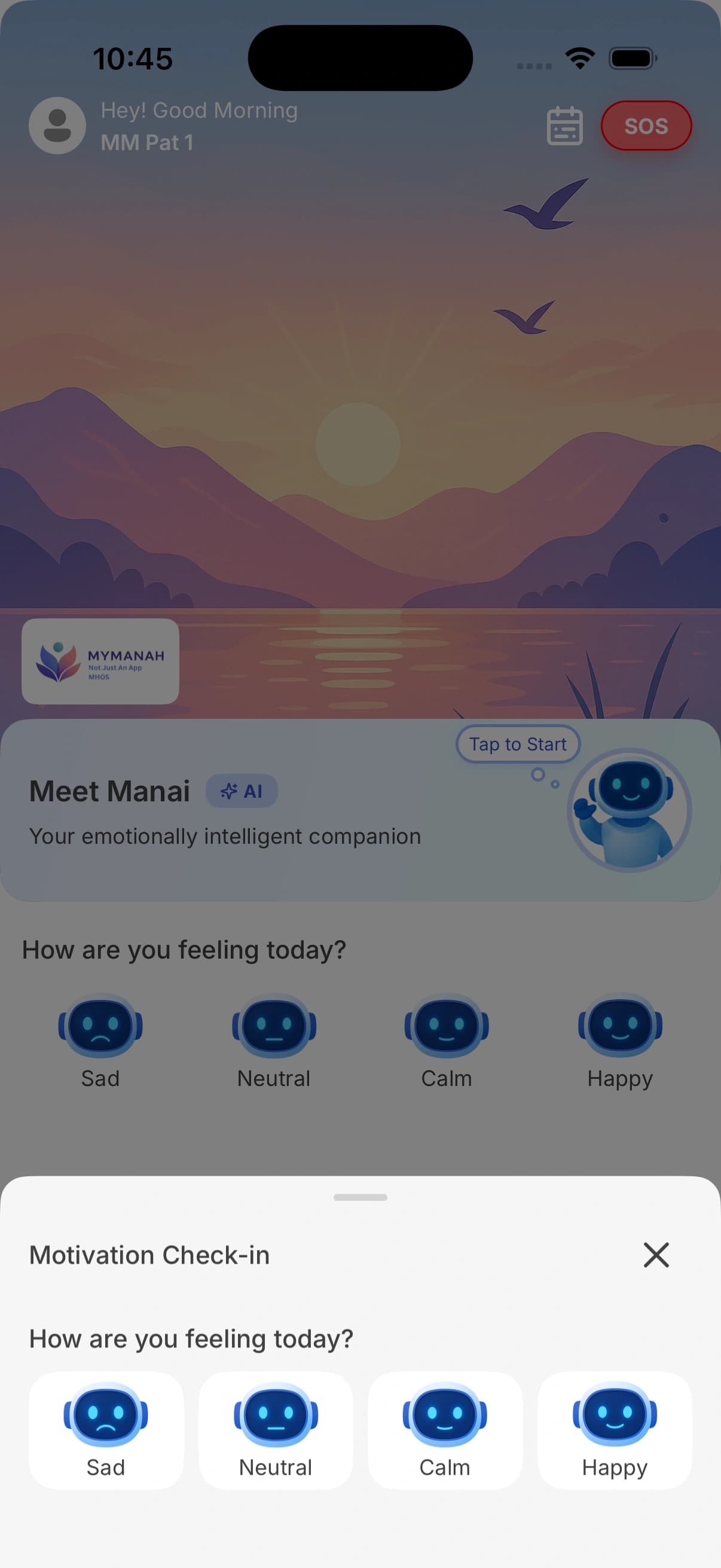
Manai Support

Manai Support

An AI-powered companion that provides 24/7 emotional support and guided conversations.
Who:Patients
Problem:Mental health support is not always available outside clinical hours.
Outcome:Continuous care access and reduced feelings of isolation.
Emotion Mirror / Emotion Twin

Emotion Mirror / Emotion Twin

Tracks emotional patterns and growth over time. Provides personalized insights to help users understand themselves.

Who:Patients
Problem:Users struggle to recognize their own emotional patterns and triggers.
Outcome:Deeper self-awareness and ability to anticipate emotional responses.
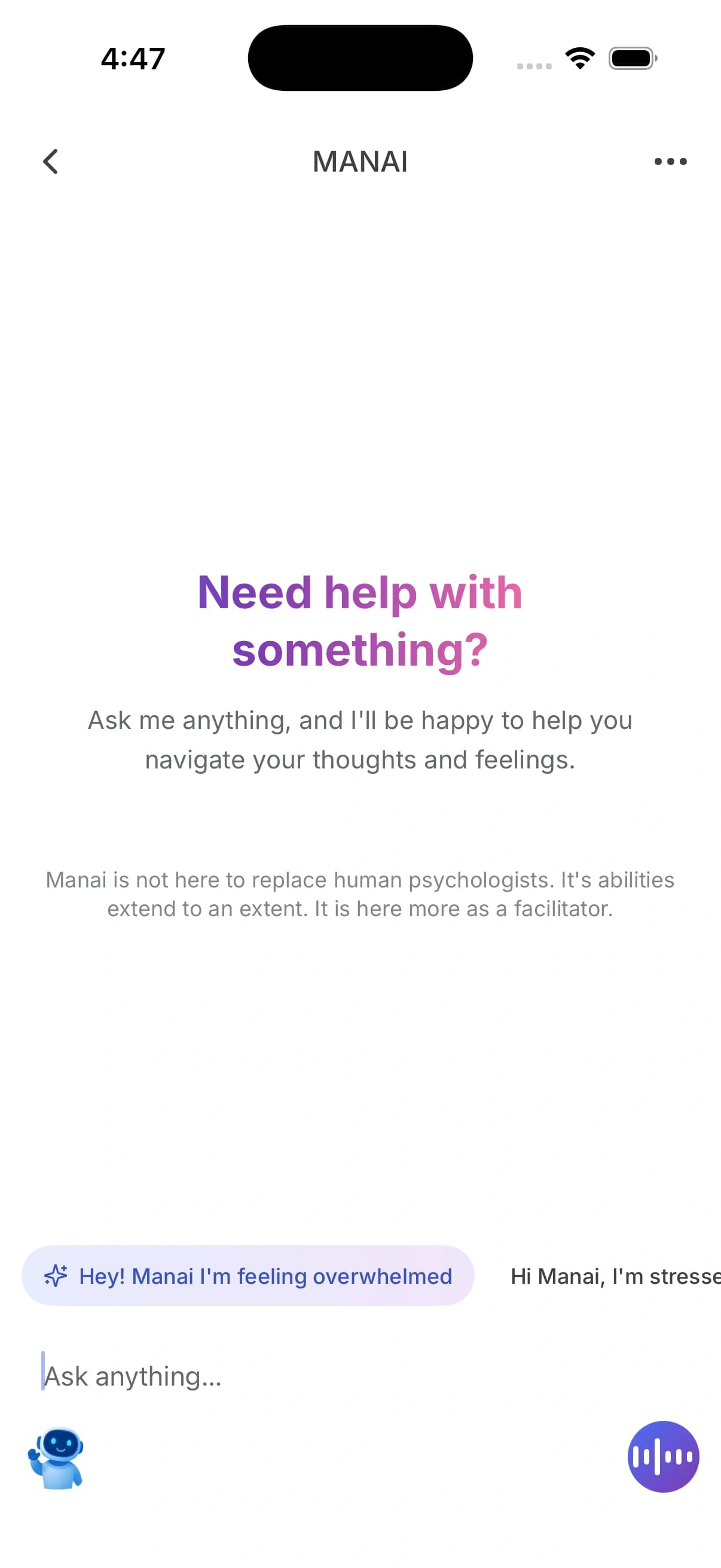
Support Alerts

Support Alerts

Monitors for situations where timely guidance may help. Provides users with proactive suggestions for well-being.
Who:Patients and Clinicians
Problem:Early warning signs of deterioration may go unnoticed until crisis.
Outcome:Earlier intervention and prevention of mental health crises.
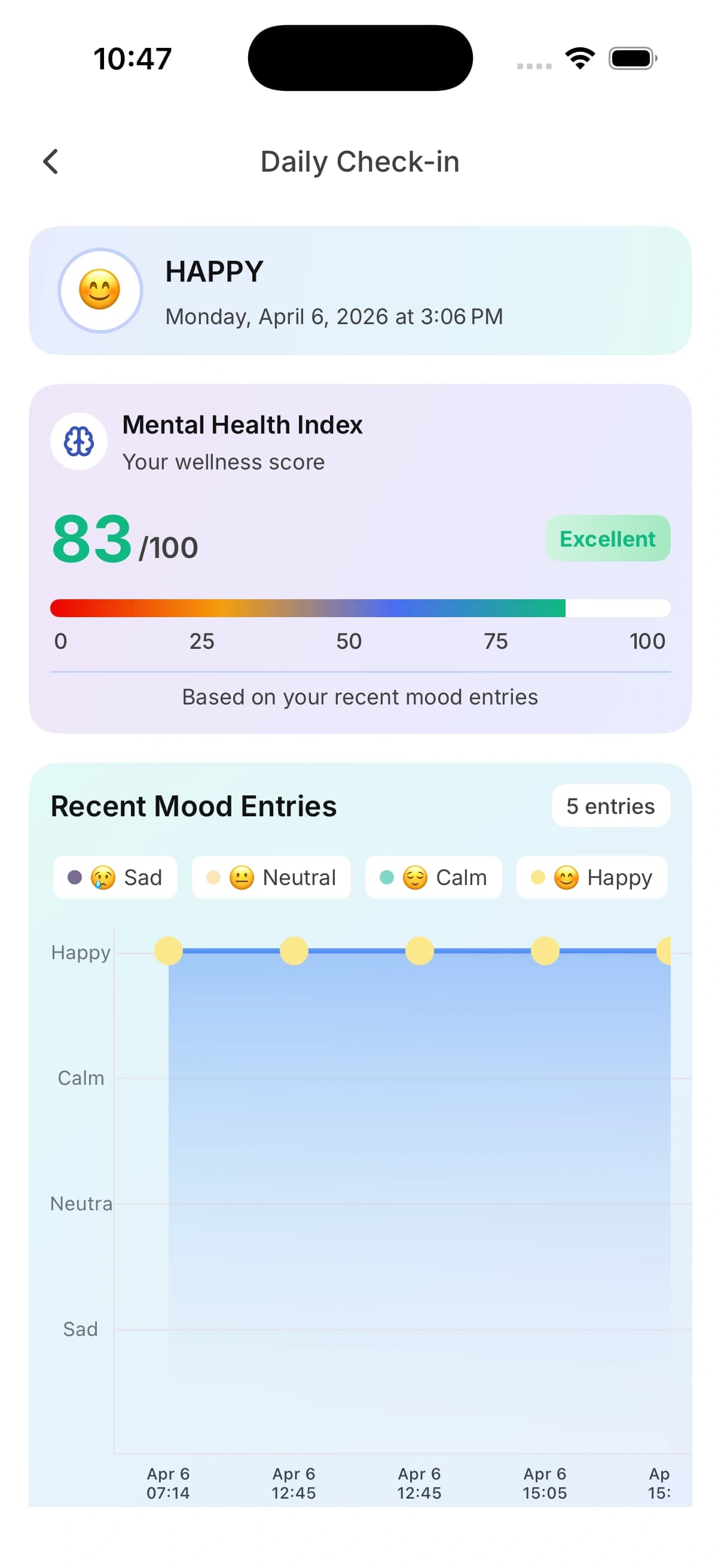
Adaptive Guidance

Adaptive Guidance

Changes interface and guidance according to user state. Creates a comfortable, intuitive experience at all times.
Who:Patients
Problem:One-size-fits-all guidance doesn't account for varying emotional states.
Outcome:More personalized and effective support tailored to current emotional state.
Summarized Insights

Summarized Insights

Summarizes overall emotional and behavioral health. Helps users observe trends and improvements over time.

Who:Patients and Clinicians
Problem:Raw data is overwhelming; users need clear, actionable summaries.
Outcome:Faster understanding of progress and clearer direction for next steps.

Clinical Features

Professional tools for clinicians to manage patient care effectively.
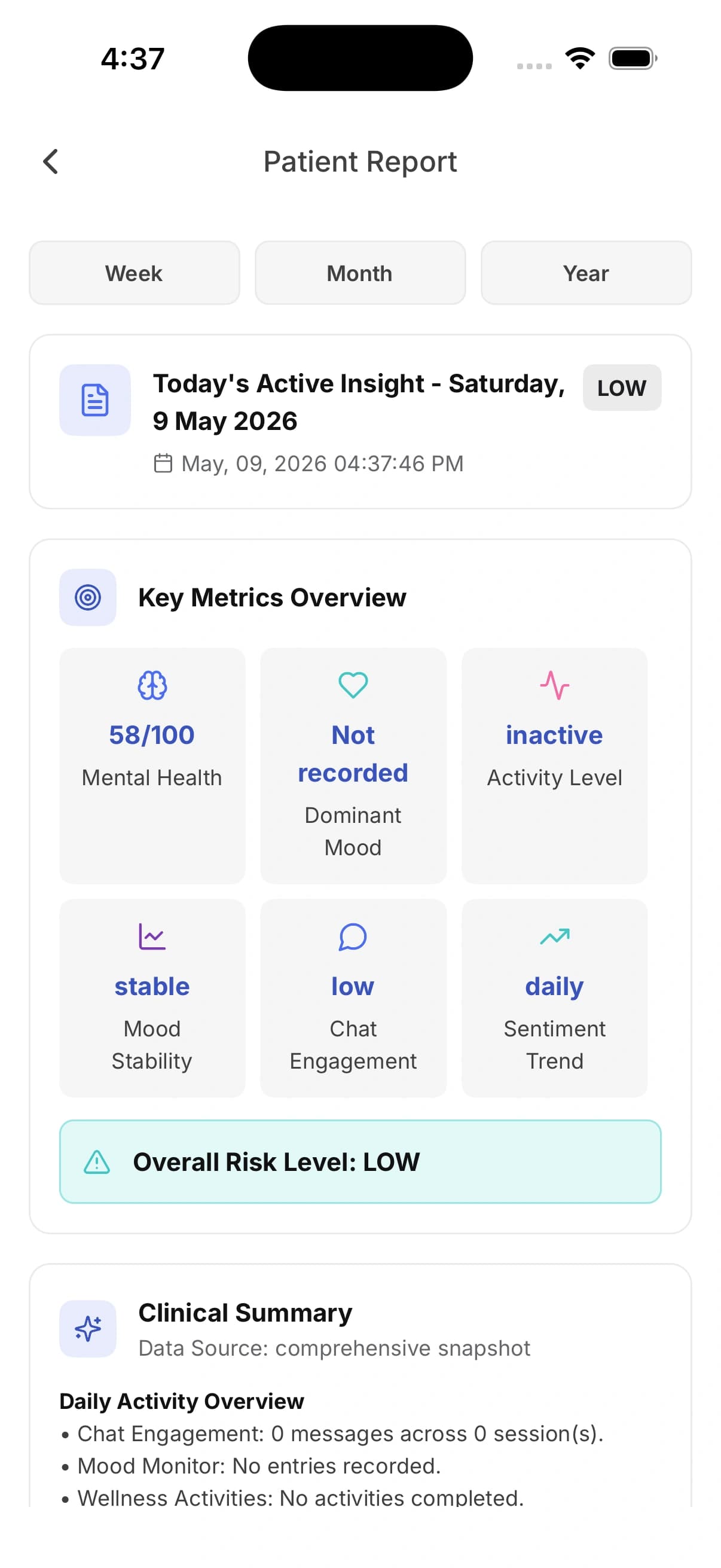
Clinician Dashboard

Clinician Dashboard

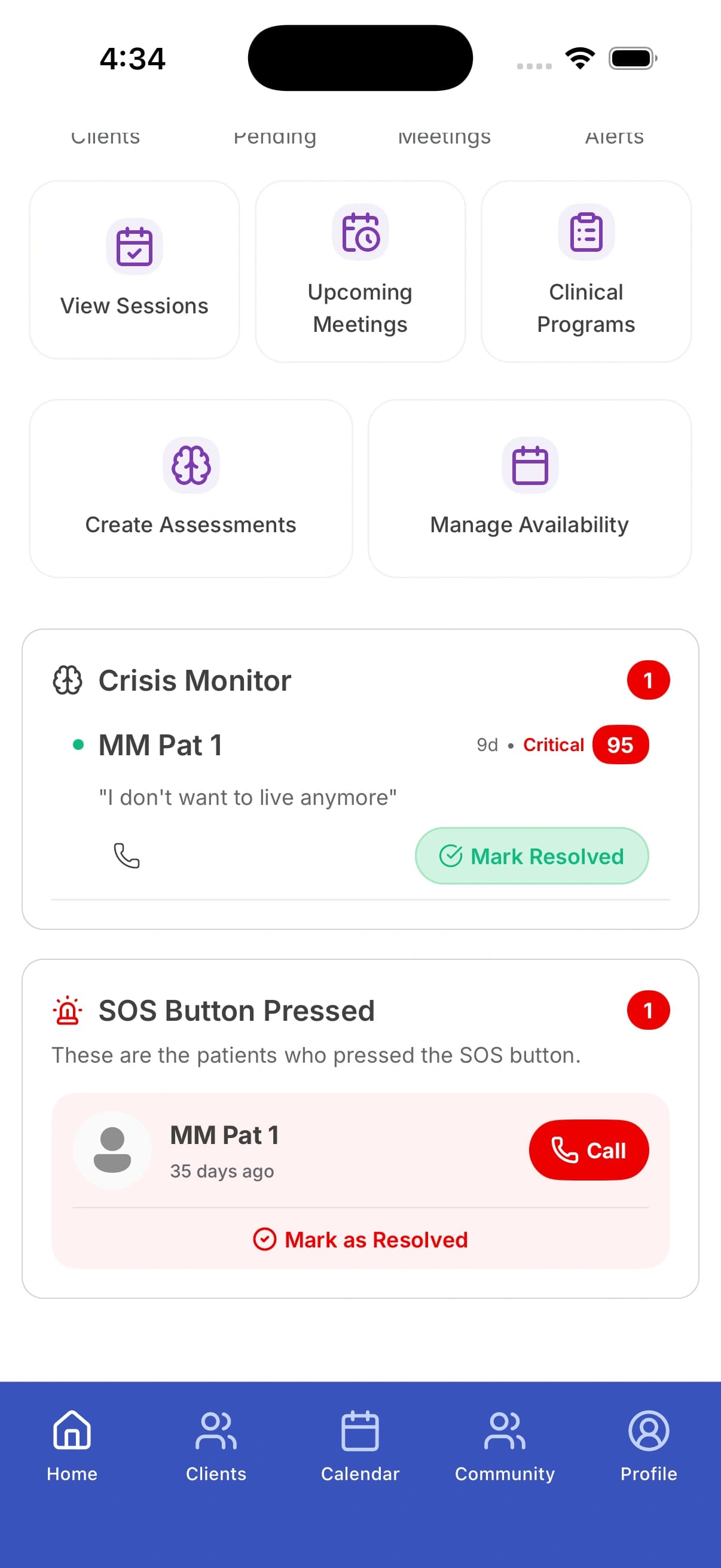
Central hub for viewing patient metrics, risk flags, and progress at a glance.
Who:Therapists, Psychiatrists, Clinicians
Problem:Clinicians lack a unified view of patient status across multiple clients.
Outcome:More efficient patient monitoring and faster clinical decision-making.
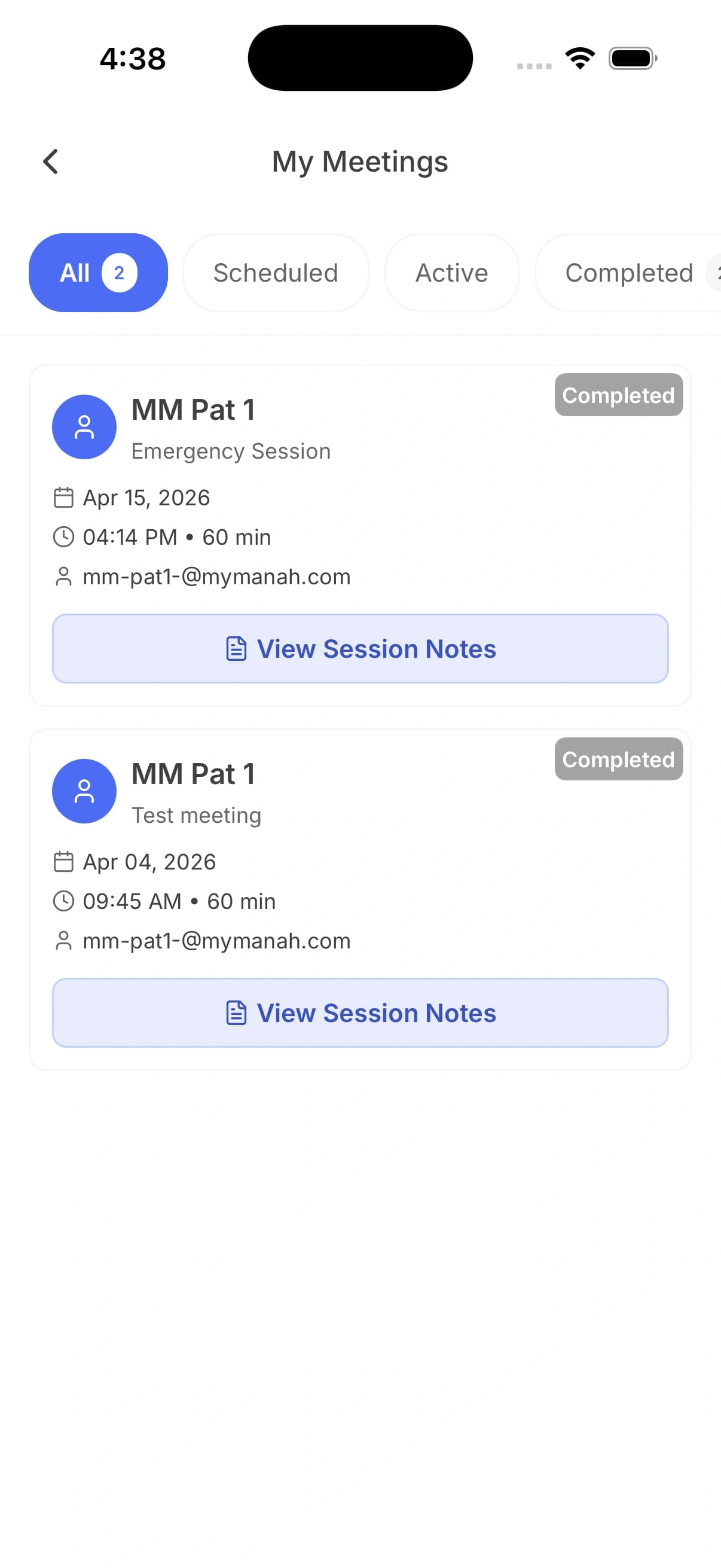
Client Manager

Client Manager

Organizes profiles, sessions, and interactions for easy tracking. Enables smooth communication and follow-ups for professionals.

Who:Therapists and Clinicians
Problem:Managing multiple patient records and session notes is time-consuming and fragmented.
Outcome:Streamlined workflow and better organization of patient information.
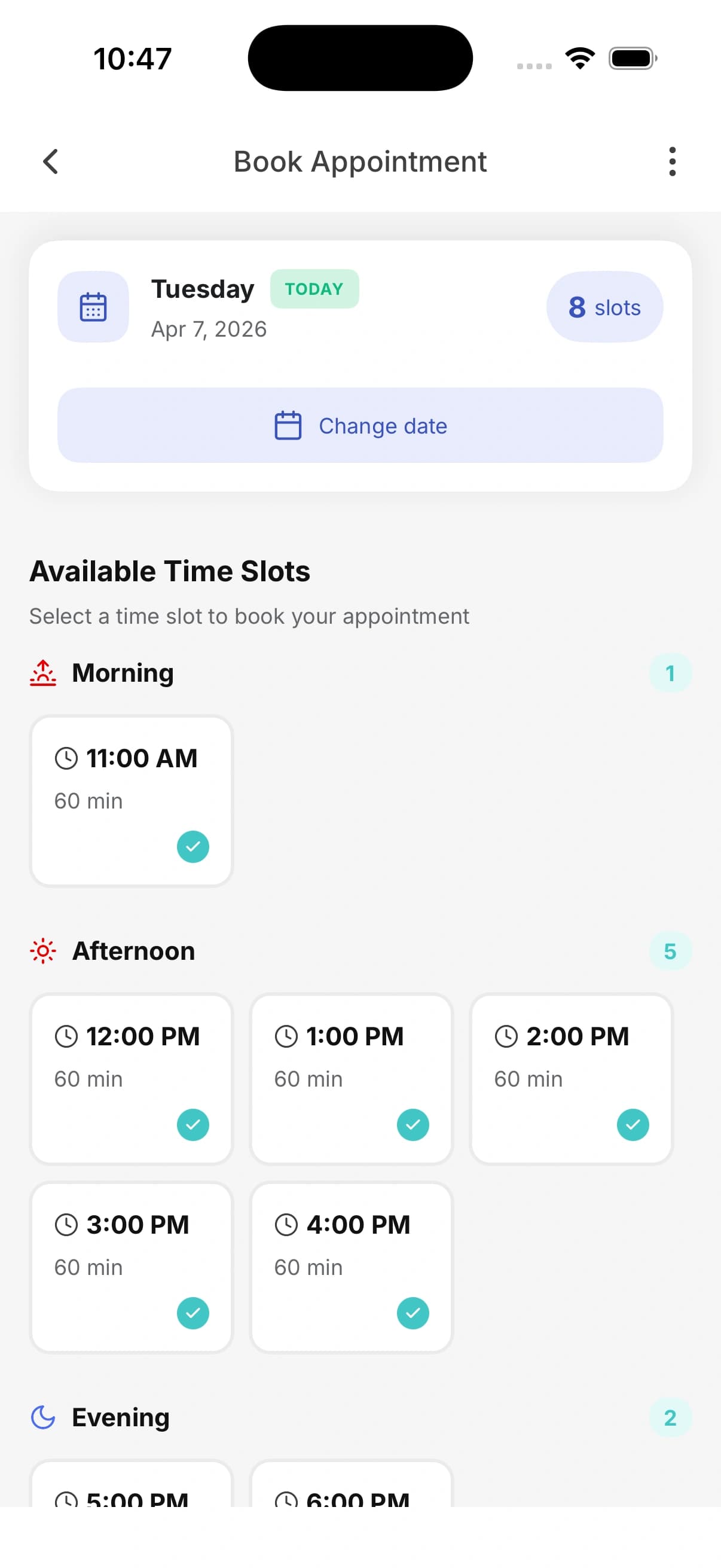
Progress Dashboard

Progress Dashboard

Visualizes personal trends and milestones. Helps users and professionals track development over time.
Who:Clinicians and Patients
Problem:Hard to see long-term progress without clear visualizations of trends.
Outcome:Clearer evidence of treatment effectiveness and patient improvement.
Session Planner

Session Planner

Simplifies scheduling, reminders, and follow-ups. Keeps users and professionals aligned and organized.

Who:Clinicians
Problem:Scheduling and session preparation are manual and error-prone.
Outcome:Reduced administrative burden and more focused clinical sessions.
Structured Notes

Structured Notes

Standardized templates for clinical documentation that capture key assessment data efficiently.

Who:Therapists and Psychiatrists
Problem:Clinical notes are inconsistent and time-consuming to write.
Outcome:Faster documentation with consistent, comprehensive clinical records.
Risk Monitoring

Risk Monitoring

AI-powered detection of risk indicators with automated alerts for clinical intervention.

Who:Clinicians
Problem:Risk indicators may be missed between sessions or in raw data.
Outcome:Earlier detection of risk and timely clinical intervention.

Institutional Features

Enterprise-grade capabilities for clinics, hospitals, and organizations.

Role-Based Access

Role-Based Access

Granular permissions for different user types (admin, clinician, patient, observer).

Who:Institution Administrators
Problem:All users having same access violates security and privacy requirements.
Outcome:Compliance with healthcare privacy regulations and secure data access.
Reporting

Reporting

Institutional dashboards with aggregated metrics, utilization reports, and outcome analytics.

Who:Institution Leaders and Administrators
Problem:Leaders lack visibility into program effectiveness and utilization.
Outcome:Data-driven decisions about mental health program investments.
Admin Controls

Admin Controls

Centralized management of users, settings, integrations, and compliance configurations.

Who:Institution Administrators
Problem:Managing users and settings across large organizations is fragmented.
Outcome:Efficient administration and consistent policy enforcement.
Multi-User Setup

Multi-User Setup

Support for multiple clinicians, departments, and locations under one institutional account.

Who:Clinics and Hospitals
Problem:Each location needs separate setup causing duplication and inconsistency.
Outcome:Unified platform across all locations with centralized management.
Teleconsultation Support

Teleconsultation Support

Integrated video conferencing for remote therapy sessions with secure recordings and notes.

Who:Clinicians and Patients
Problem:Remote sessions require separate tools with poor integration.
Outcome:Seamless remote care with full integration into patient records.

Infrastructure & Accessibility Features

Technical foundation ensuring reliability, security, and universal access.
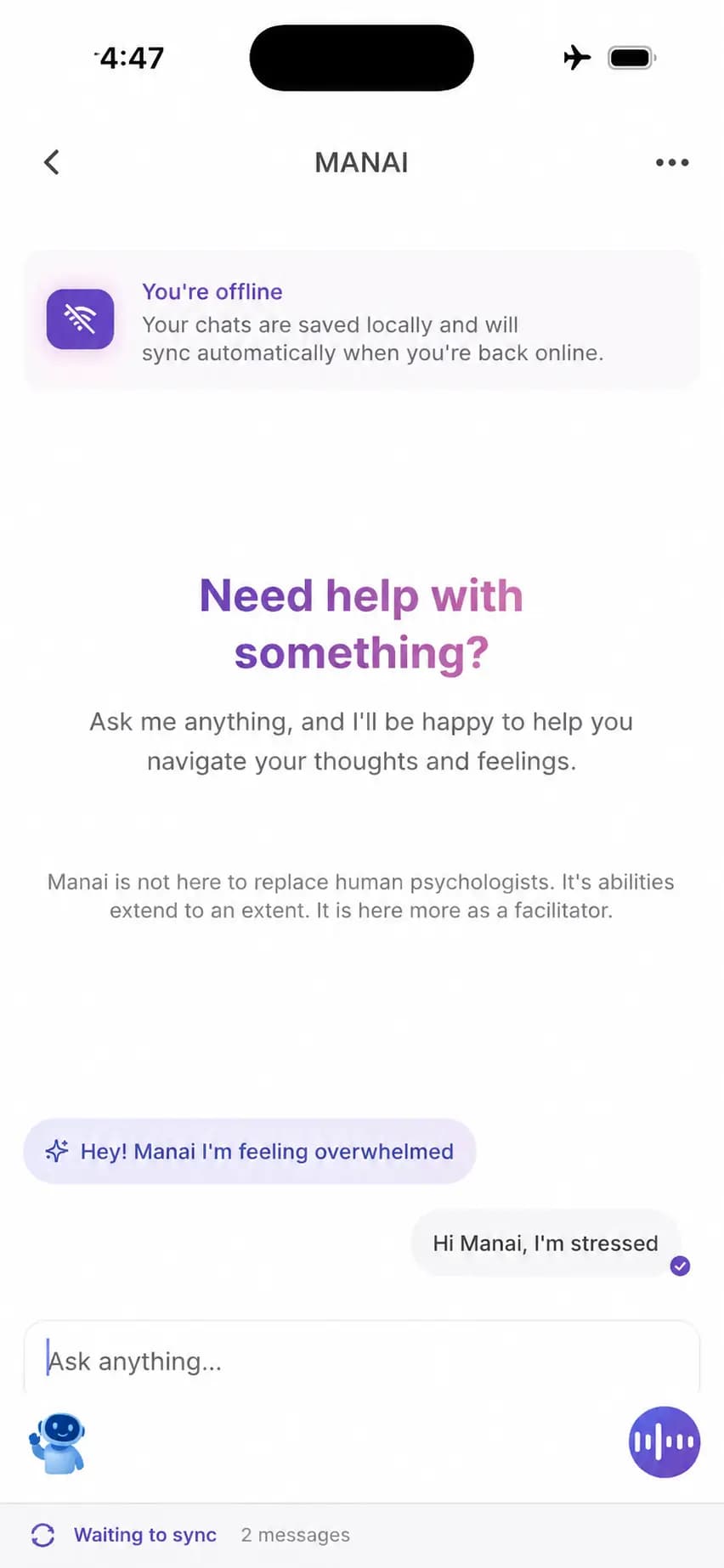
Offline Access

Offline Access

Allows core services and journaling without internet. Data syncs securely when connectivity is restored.

Who:All Users
Problem:Users in low-connectivity areas cannot access mental health support.
Outcome:Continuous access to tools regardless of internet availability.
Secure Journals

Secure Journals

Stores reflections and progress safely and privately with end-to-end encryption. Supports structured personal growth and daily tracking.

Who:Patients
Problem:Users fear their sensitive mental health data may be exposed or misused.
Outcome:Trust in platform privacy and willingness to share honestly.
Data Sync

Data Sync

Automatic secure synchronization across all devices with conflict resolution and version history.
Who:All Users
Problem:Data loss or inconsistency across devices creates frustration and gaps.
Outcome:Seamless experience across phone, tablet, and web with no data loss.
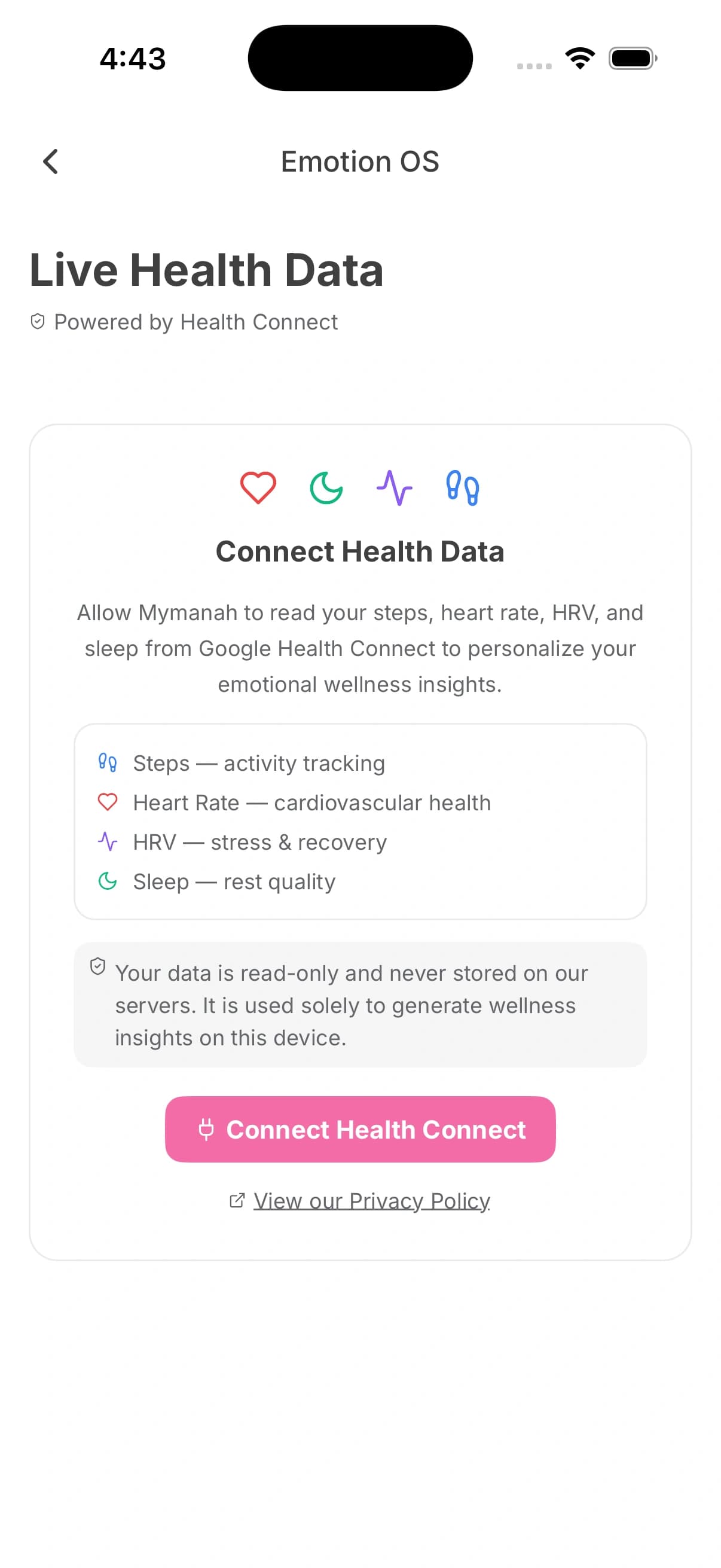
Health Tracker Integration

Health Tracker Integration

Connects personal health patterns to daily emotional trends. Supports holistic understanding of well-being.

Who:Patients
Problem:Physical health data (sleep, activity) is not connected to mental health insights.
Outcome:Holistic view of well-being connecting physical and emotional health.
Adaptive Interface

Adaptive Interface

Changes interface and guidance according to user state. Creates a comfortable, intuitive experience at all times.

Who:All Users including those with disabilities
Problem:Static interfaces don't accommodate varying user needs and capabilities.
Outcome:Inclusive access for users with diverse abilities and preferences.